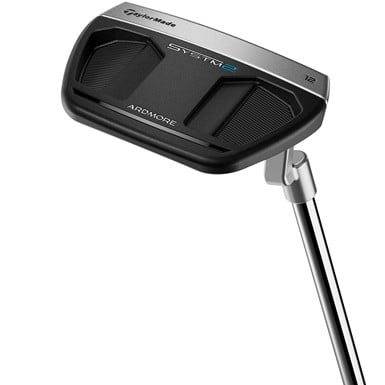
AQID: 3258a8f0b98998848e32cd910ca57095

Men's Putters

39 Results
Selection of a filter will refresh the page with new results.
Sort By: {{opt.text}}

Men's Putters Matched to Your Stroke

You use your putter more than any other club, so a putter that fits your stroke is the fastest way to lower your scores. This collection covers men's blade, mallet, and low-torque putters from Scotty Cameron, Odyssey, PING, TaylorMade, L.A.B. Golf, Bettinardi, Evnroll, and more. Every putter is covered by TGW's 30-Day Playability Guarantee, so you can test it on real greens before you decide.


Blade vs. Mallet Putters

Blades are compact, traditional heads that suit golfers with an arcing stroke and players who putt by feel. Mallets are larger and heavier, with weight spread to the perimeter for stability on off-center hits and more room for alignment aids. If you miss a lot of short putts or struggle with distance control on mishits, start with a mallet.


Toe Hang and Neck Style

Toe hang should match your stroke. A putter with noticeable toe hang suits a stroke with some arc, while a face-balanced putter suits a straighter back-and-through motion. Low-torque and zero-torque putters are a newer option, designed to resist twisting for golfers who struggle to square the face. The Golf Guide explains how to tell which you need in matching your putter to your stroke.


Putter Length

Most men play putters between 33 and 35 inches, but your setup decides it. At address, your eyes should sit over or just inside the ball, with your arms hanging naturally. A putter that is too long pushes your hands up and your eyes outside the ball, which makes aiming harder. The Golf Guide covers it in choosing the right putter length.


Finding Your Putter

Start with stroke type, then choose a head shape you can aim, then confirm length and grip size. Larger grips reduce wrist action, while slimmer grips add feel. To focus on high-stability options, browse all mallet putters.

Shop men's putters at TGW and find the shape, balance, and length that help you hole more putts.

Men's Putters FAQs


Should I use a blade or mallet putter?

Use a blade if your stroke has a noticeable arc and you putt by feel. Use a mallet if you want more forgiveness and alignment help, especially on short putts. Most improving golfers make more putts with a mallet.


What length putter should a man use?

Most men play between 33 and 35 inches. The right length lets your eyes sit over or just inside the ball with your arms hanging naturally. If you have to crouch or stand too upright, you need a different length.


What is toe hang on a putter?

Toe hang is how much the toe points down when you balance the shaft on your finger. More toe hang suits an arcing stroke, and less toe hang, or face balance, suits a straight stroke. Matching toe hang to your stroke helps the face return square.


What is a zero-torque putter?

A zero-torque or low-torque putter is designed to resist twisting during the stroke, so the face stays square more easily. It suits golfers who struggle with pushes and pulls on short putts. Try one if a traditional putter keeps opening or closing on you.


Does putter grip size matter?

Yes. Larger grips reduce wrist action and help golfers with a handsy stroke, while slimmer grips give more feel. Choose the size that keeps your wrists quiet without losing touch on long putts.


How much should I spend on a putter?

Spend enough to get the right fit. A well-fit putter at any price will outperform an expensive putter that does not match your stroke. Premium putters add precision milling and materials, but fit matters more than price.


Are left-handed men's putters available?

Yes. Many putter models are offered left-handed, though selection is narrower. Use the hand filter on the category page to see current options.


How often should I replace my putter?

Putters do not wear out quickly, so replace yours when it no longer fits your stroke or you lose confidence over the ball. A new grip can refresh feel without replacing the whole putter. Thanks to the 30-Day Playability Guarantee, testing a new putter is low risk.